Who we work with

Sheet music & book printing for music publishers

Performance scores, songbooks and hymnals printed short run, with thread-sewn binding that lies completely flat on the stand — hands free, page after page.

From 25 copies Thread-sewn lay-flat Saddle-stitch for short scores High-opacity text stock Mono notation clarity ISBN & barcode ready

A score that won’t stay open is a score that gets in the way. Whether it’s a choral set propped on a music stand or a piano tutor resting on the keys, the binding has to do one thing without fail: lie completely flat and stay there.

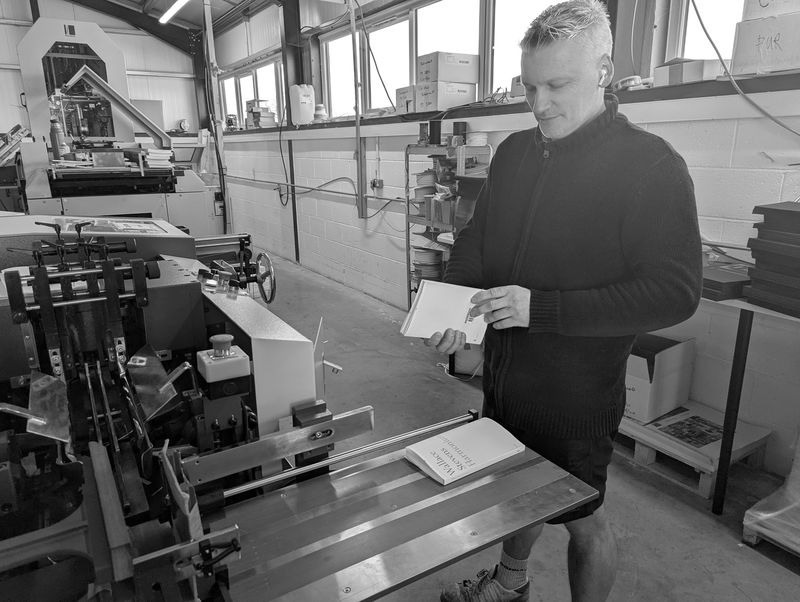
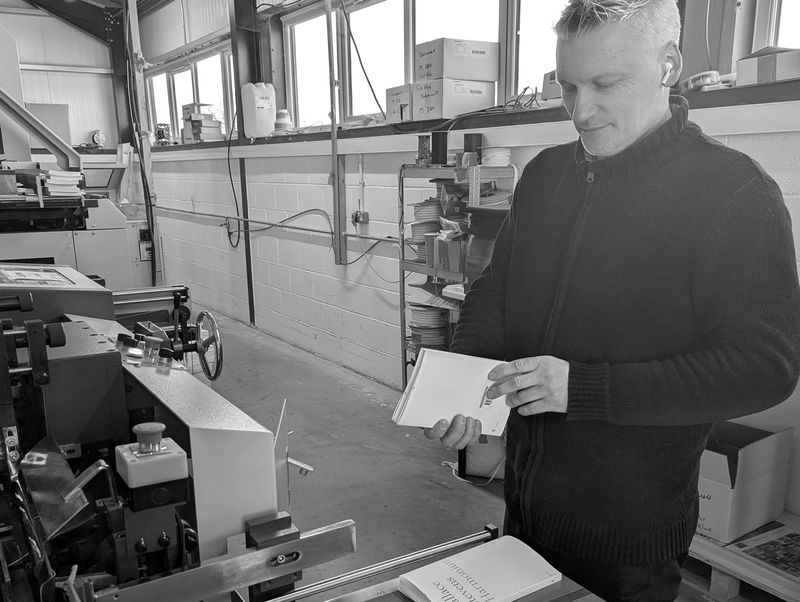
We print performance scores, songbooks, hymnals, tutor books and exam material with thread-sewn binding as standard for anything that needs to live on a stand. Thread-sewn sections open flat across every spread without hands, clothes pegs or a cracked spine. For thinner scores and part sheets, saddle-stitch keeps costs low and pages neat. Short runs make niche repertoire viable; fast reprints keep best-sellers in stock.

What we print

Built for a music publisher’s list.

01

Performance scores & parts

Full scores and individual parts for orchestral, choral and chamber repertoire. Thread-sewn binding that opens flat on the stand; high-opacity paper so notation stays crisp and ink doesn’t bleed through.

02

Songbooks & hymnals

Congregational hymnals, song collections and worship books that survive years of weekly use. Thread-sewn for durability and lay-flat convenience; durable covers that hold up to constant handling.

03

Tutor & method books

Graded instrumental tutors, theory workbooks and exam syllabus material. Reliable lay-flat binding so students can follow along without a free hand to hold the page.

04

Exam pieces & short scores

Thin exam booklets and individual pieces where saddle-stitch keeps the format neat and economical, and short runs keep niche grades commercially sensible.

What's included

Set up for how you work.

Binding

  • Thread-sewn — the lay-flat hero for anything on a stand or piano
  • Saddle-stitch for short scores, parts and exam booklets
  • PUR perfect binding for thicker songbooks and catalogues
  • Case-bound hardback for premium hymnal and anthology editions

Paper & print

  • High-opacity uncoated stock — notation stays crisp, no show-through
  • Mono printing at full resolution for sharp, clear notation
  • Colour covers with mono interiors at no extra cost
  • Heavier text weights that survive repeated page turns

Formats & quantities

  • A4 portrait, A5, B4 and custom landscape score formats
  • From 25 copies — viable for niche repertoire and limited editions
  • Choral sets and multiple-copy orders welcome
  • Fast reprints from held files when a title sells through

Trade-ready

  • ISBN barcodes applied to the cover
  • Free ONIX export for distributors and the trade
  • Spine and cover set up for catalogue listing
  • Sample pack available before committing to a run

Ready to price up a project?

Build the spec, see the price live. No account required, no email gate — just an instant figure based on what you actually want.

Frequently asked

Quick answers, before you ask.

Why is thread-sewn binding better than perfect binding for scores?

Perfect binding (glued spine) never opens fully flat and tends to crack under repeated use — exactly the wrong outcome for a score that lives on a stand. Thread-sewn binding stitches pages into sections before the book is assembled, so every spread opens completely flat and stays open without assistance. For music publishers, that’s the functional requirement that overrides everything else.

When is saddle-stitch the right choice?

Saddle-stitch (staple-bound through the spine) is ideal for short scores, individual parts and exam booklets — typically under 64 pages. It’s economical, lies reasonably flat when open, and keeps thin publications neat and compact. For anything thicker, or anything that will be used heavily over time, thread-sewn is the better choice.

What paper do you recommend for notation printing?

An uncoated stock with good opacity — typically 80–100gsm — so notation prints sharply in mono without ink bleeding through to the reverse. Coated stocks can work for colour covers, but uncoated is the standard for music interiors: it reads well under artificial light, takes a pencil annotation, and doesn’t glare on a music stand.

Can you handle short runs for niche repertoire?

Yes — short runs are where we’re most useful to music publishers. Niche repertoire, limited editions and exam material often can’t justify large print quantities, so starting from around 25–50 copies keeps the investment manageable. We hold your files ready, so when a title sells through, a reprint is quick. Get a quote for your specific run and spec.

Can you apply ISBNs and supply ONIX data?

Yes. We barcode the cover from your ISBN and offer a free ONIX metadata export so the title is ready for your distributor and the book trade as soon as it’s off the press.

Can’t find your answer? See our 73-question book printing FAQ for detail on file prep, binding, paper, turnaround and shipping.

Member of UK book industry trade bodies
More from Imprint Digital

Ready to get your books printed?

Get an instant quote in under a minute, or order a free sample pack to see and feel our work first.

Get an instant quote Free sample pack