Case binding is the bookbinding method used to make hardback books. Printed pages are gathered into sections, sewn together into a solid book block, and fixed inside a rigid 'case', two boards and a spine covered in printed paper, cloth or leather. The result is the most durable, longest-lasting binding there is, which is why it's the choice for books built to be kept.
You'll also hear it called casebound, case bound or simply hardback binding, they all describe the same construction. If you're completely new to hardbacks, our plain-English guide to understanding hardback books is the gentler starting point; this page is the technical detail.
What is case binding, exactly?
A case-bound book is two separate things made independently and then married together:
- The book block: your printed pages, folded into sections and (in our bindery, always) sewn together with thread. The block is glued off at the spine, and folded endpapers are attached to its first and last sections.
- The case: two pieces of thick greyboard and a spine piece, wrapped in the covering material: a printed paper case, a textured material like Wibalin, or cloth or leather finished with foil blocking.
Joining them is called casing in: the endpapers are glued to the inside faces of the boards, the book is pressed, and the block is permanently anchored inside its case. The video below shows the full process on our casing-in line in Exeter.
Not every hardback is built the same
A case-bound hardback can have either a sewn or a glued book block. The rigid case protects the pages; the binding inside affects the price, opening and suitability for repeated use.
In a thread-sewn block, folded sections are stitched together before casing. This supports repeated use and helps the book open more easily. It does not make a completely lay-flat book, so important artwork and text should stay clear of the gutter.
We offer sewn and glued blocks for hardback books. Choose sewing for easier opening and repeated use, or glued binding for a lower-cost edition. If you're comparing quotes, ask each printer one question: "is the book block sewn or glued?"
The details of case binding
Grain direction
All paper materials have a grain direction, and it's essential to understand the impact incorrect grain can have on a case-bound book. The general rule: every material in the book (paper, cloth and board) should have its grain running head to tail in the finished volume.
This isn't always the most economical way to use a sheet, but ignoring it causes books and covers to warp as materials with opposing grains are glued together. Endpapers are especially unforgiving: wrong grain causes rippling or cockling, which ruins the first impression the moment the book is opened.
Cover styles: PPC, Wibalin, book cloth, buckram and leather
There are several ways to cover a case, and they fall into two families.
The first is printed. The most common covering by far is the printed paper case (PPC): your cover design printed, laminated and wrapped around the boards. It's the most economical route and the only one that puts full-colour artwork directly on the case.
The second family is covered: the case is wrapped in a coloured material and the design goes on by foil blocking or debossing instead of print. The materials, from most-used to most precious:
- Wibalin: a paper-based covering material with the look and feel of cloth, made by Winter & Company and the modern standard for covered cases. It takes foil beautifully, resists scuffing and marking better than open-weave fabrics, and comes in a huge colour range, we stock Wibalin Buckram in 20 colours, so covered short runs don't wait on a material order.
- Book cloth: the traditional covering: woven fabric (cotton or linen) backed with paper or sized so it can be glued to the boards without the adhesive striking through. "Clothbound" on a publisher's page means exactly this, a case-bound book covered in book cloth, usually with a foiled spine.
- Buckram: the heavyweight of book cloths: a coarse, stiffened woven cloth with a distinctive pronounced weave. In bookbinding it's the library standard, buckram-covered cases shrug off decades of handling, which is why library rebinds and theses traditionally specify it. (The same word covers stiffening fabrics used in curtain-making and millinery, different products for different trades; ours is the bookbinding kind.)
- Leather and vegan leather, the heirloom tier, for bespoke and presentation editions, foiled or blind-tooled.
Choosing between them: if the cover design is the artwork, PPC (or PPC plus a dust jacket); if the book should feel like a classic edition, Wibalin or cloth with a foiled title, and a jacket over the top if you want both. None of the covered materials takes conventional printing, so type and decoration are foiled, embossed or debossed.
Foil blocking
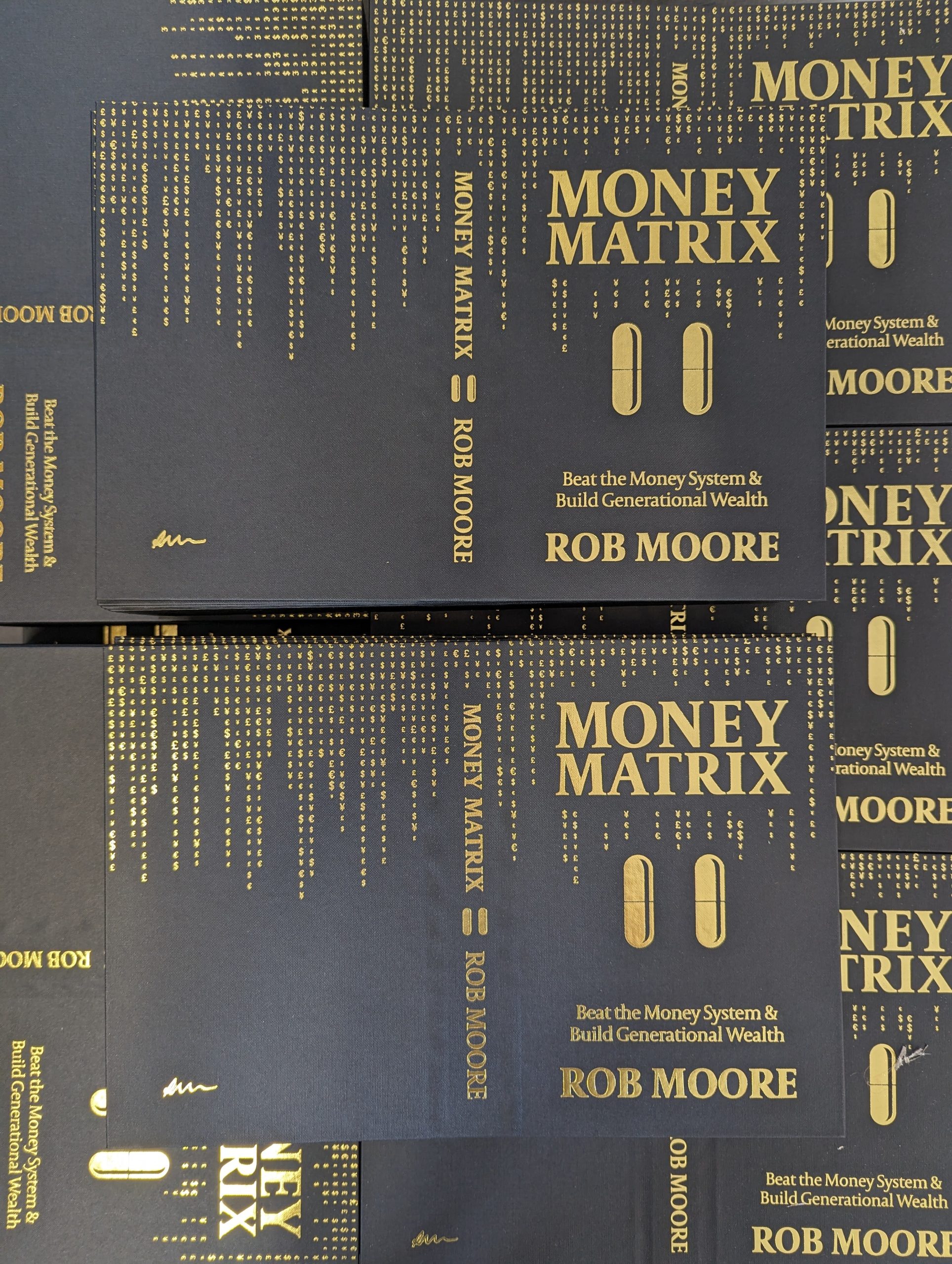
Foil blocking presses metallic or pigment foil into the cover material, usually on the front board and spine. It's available in a wide range of colours and works beautifully on cloth and Wibalin. We've produced many hardbacks with intricate foil designs; ask us for a sample.
Endpapers
Endpapers are the folded sheets that attach the book block to the inside of the case. They're typically an uncoated stock slightly heavier than the text pages, because they do the structural job of holding the block in place, and they're the first thing you see when you open the book.
We fold 4pp endpapers and attach them to the first and last sections after sewing. They can be plain white, printed with your own artwork, or coloured: our coloured endpapers are Fedrigoni Woodstock 140gsm, coloured through the sheet, in 13 colours we keep in stock.
Dust jackets
A dust jacket is a detachable printed wrap with flaps folded inside the cover. Jackets began in the 1800s as protection for cloth-covered books; today they're a second canvas, cloth and foil underneath, full-colour artwork on top.
Head and tail bands
Head and tail bands are the small strips of coloured fabric at the top and bottom of the spine, in solid colours or two-colour twists. Their job today is aesthetic, they neatly hide the glue and sewing at the spine ends and add a fine splash of colour that signals a properly finished book.
Marker ribbons
Practical and attractive, a marker ribbon (around 4mm wide) is glued under the headband at the top of the block, a more elegant bookmark, available in a range of colours.
Square backing
A square-back finish gives the spine a clean, flat profile using the same 2750-micron board as the front and back covers, which also means the spine can carry print or foiling.
How a case bound book is made, step by step
This is the actual sequence a PPC-covered case bound book follows through our Exeter bindery, merged here from our old shop-floor walkthrough, because nothing explains case binding better than watching one get made:
- Cut and fold: the printed sheets are cut and folded into sections, along with the endpapers.
- Endpaper the sections: a thin line of glue at the hinge attaches an endpaper to the front section and another to the back.
- Sew the block: the sections are thread sewn together into a single sturdy book block.
- Prepare the cover: PPC covers get an anti-scuff laminate; cloth covers are foil blocked at this stage when foil is ordered.
- Cut the boards, 2,750-micron greyboard is cut to fit the book block exactly, including the overhangs.
- Back-line the block: material is fixed around the spine of the block to stiffen and strengthen it.
- Trim to size: the block goes through a three-knife trimmer, cutting head, tail and fore-edge in one pass.
- Make the case: the laminated cover is wrapped and glued around the boards: this finished shell is the "case" in case binding.
- Casing in: the block is loaded onto a wing, glue is applied to the outer endpapers, and the case is pressed around the block.
- Form the joint: a joint-forming clamp presses the groove beside the spine that lets the heavy cover swing open freely. That groove is the sign of a properly finished hardback.
Case binding vs other binding methods
Case binding sits at the top of a ladder of binding strength. Where it stands against the two main paperback methods:
| Method | How the pages are held | Opening | Typical use |
|---|---|---|---|
| Case-bound hardback | Sewn or glued block in a rigid case | Depends on the block and materials; not completely lay-flat | Reference books, gifts and editions to keep |
| Thread-sewn paperback | Stitched sections in a flexible cover | Easier opening; not completely lay-flat | Cookbooks, manuals and illustrated books |
| PUR-bound paperback | Adhesive binding at the spine | Flexible glued spine; not completely lay-flat | Novels, catalogues and general paperbacks |
For the full tour of binding styles, see our guide to the types of book binding.
When to choose case binding
Choose a case-bound book when longevity, appearance and perceived value matter most:
- High-value publications: first editions, luxury and commemorative volumes
- Academic and professional texts, textbooks, references, manuals, and thesis and dissertation printing
- Libraries and collections: books that must survive circulation
- Art, photography and coffee table books, where the object matters as much as the content
- Children's books: built for small, enthusiastic hands
- Special editions: collector's versions of popular titles, novels, yearbooks and company histories
Ordering a case-bound book
Hardback runs with us start at just 25 copies, you don't need a warehouse-scale print run for a properly sewn, case-bound book. Three things make the process painless:
- Price it instantly… the hardback book printing page prices your exact spec in seconds, or use the full book price calculator.
- Get the cover geometry right… our free cover template tool generates a production-accurate PPC or dust jacket template (PDF, PSD or IDML) from your spec, including the real spine width, or check the spine alone with the spine calculator.
- Approve a proof first: a free digital proof comes before printing, and printed proofs are optional.