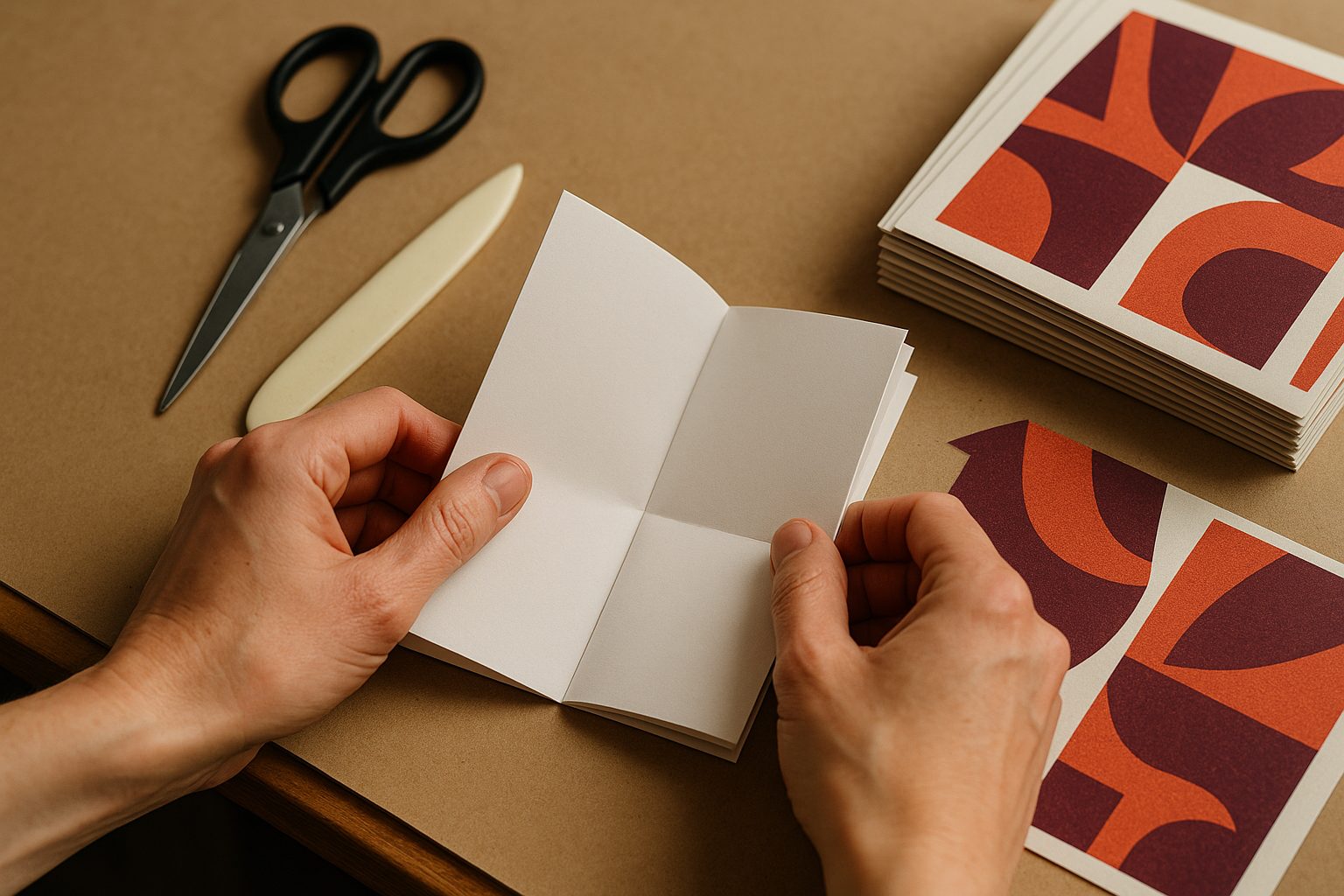
To make a zine you need one sheet of paper, something to say, and about an hour. That's the honest, complete answer, everything else in this guide is refinement. Zines are the most forgiving format in print: there are no gatekeepers, no rules a zine hasn't already gleefully broken, and no minimum standard beyond "you made it and you mean it". This guide walks the whole road: what a zine is, choosing a format, the classic one-sheet fold, making your pages, copying them, binding them, and selling them at a fair table, with the UK specifics most guides skip.
What is a zine?
A zine (rhymes with "seen", short for magazine or fanzine) is a self-published, small-circulation booklet, made for love rather than profit, usually photocopied or short-run printed, and traded, gifted or sold for a few pounds. The lineage runs from 1930s science-fiction fanzines through punk in the '70s (Sniffin' Glue, famously stapled together and proud of it) and riot grrrl in the '90s, to today's art, photo and perzine culture with its fairs in most UK cities.
What makes something a zine isn't the subject, it's the ethos: self-published, personal, unfiltered. Nobody commissioned it. Nobody could have.
Step 1: decide what your zine is about
A zine only needs to sustain 8 to 32 small pages, which is wonderfully little. If you're stuck, the established genres are a menu:
- Perzine: personal writing: diary extracts, essays, a season of your life, one obsession explained.
- Art or photo zine, a sketchbook edit, one photo walk, a series that doesn't justify a whole book but deserves paper.
- Fanzine (your band, your club, your show, your niche) enthusiasm as a genre.
- Poetry pamphlet: eight poems is a zine; the format has carried poetry for decades.
- How-to / community: recipes, local walks, allotment notes, mutual-aid info, a guide to your town's best greasy spoons.
One honest rule: a zine about a single small thing beats a zine about everything. "Every café on my street, reviewed" is a better first zine than "my thoughts".
Step 2: pick a format
Zine formats are conventions, not laws, but they exist because they suit the ways paper folds:
| Format | Made from | Pages | Best for |
|---|---|---|---|
| One-sheet mini zine | A single A4 or A3 sheet, folded | 8 tiny pages | First zines, free handouts, one idea |
| A5 stapled (half-fold) | A4 sheets folded in half, stapled | 8 to 48 | The standard zine, most fair tables are A5 |
| A6 quarter-size | A4 folded twice | 8 to 32 | Pocket zines, poetry, tiny art editions |
| Perfect bound | Trimmed pages, glued spine | 64+ | A zine that has quietly become a book |
Page counts run in multiples of four, every folded sheet gives you four pages, so a "20-page" A5 zine is five folded sheets. Plan your content to a multiple of four from the start and you'll never need a desperate filler page (though a good filler page is also a zine tradition).
Step 3: the classic fold: an 8-page zine from one sheet
The one-sheet mini zine is the format most people make first, because it needs no staples, no glue and no equipment. How to fold it:
- Fold an A4 sheet in half the long way (landscape, left edge to right edge). Unfold.
- Fold it in half the short way (top to bottom). Keep it folded.
- Fold each half back on itself, the folded sheet now concertinas into quarters. Unfold everything: you have eight rectangles creased into the sheet.
- Cut a slit along the centre crease, fold the sheet in half short-ways again and cut from the folded edge along the middle crease, stopping halfway. Unfold: there's a slit in the middle of the sheet.
- Fold long-ways and push the ends together. The slit opens into a diamond; keep pushing and the pages collapse into a little 8-page booklet. Crease everything sharp.
Number the pages lightly in pencil first time so you learn which rectangle becomes which page, the layout on the flat sheet is counter-intuitive (two rows, half of them upside down), and discovering that is a rite of passage.
Step 4: make your pages
Two traditions, both correct:
The analogue way
Cut and paste: actual scissors, actual glue stick. Type or handwrite your text, cut it into blocks, arrange it with your images on master pages, and photocopy the result. The photocopier flattens everything into that classic high-contrast zine look, and imperfection is the aesthetic: visible tape, handwriting, tilted columns. If you want the look with less mess, make your collage flat and photograph or scan it.
The digital way
Any layout tool works: Canva (free templates at A5), Affinity, InDesign, even Word. Set your page size to the finished zine size (A5 for the standard format), work in single pages, not spreads, keep text 10mm clear of edges, and export a PDF. If your artwork runs to the page edge, add 3mm bleed, and if that sentence means nothing to you, our bleed explainer covers it in two minutes.
One technical word worth knowing: imposition: the rearranging of pages so they land in the right order once sheets are folded (page 1 and page 8 share a sheet face on a stapled zine). For home printing, look for "booklet" mode in your print dialog, which imposes automatically. A professional printer handles imposition for you, send pages in reading order, 1, 2, 3…
Step 5: copy it
The right copying method depends on run size and how the zine needs to feel:
- Home printer: fine for 5 to 20 copies; use booklet mode and 80 to 100gsm paper. Ink costs creep beyond that.
- Photocopier: the traditional method and still brilliant for mono zines: libraries and print shops charge pennies a side, and the aesthetic is the genre's home key.
- Risograph: the beloved indie middle ground: vivid spot-colour prints with a screen-print feel, from riso studios in most UK cities. Suits bold art zines; needs artwork built in separations.
- A professional short run, when a fair table, a shop, or your own patience demands proper trimming, real staples and paper choices, a bindery takes your PDF from 10 copies; the production details live on our zine page. The threshold where this beats the photocopier is lower than most people think, roughly the point where you're hand-folding your third batch of 25.
Step 6: assemble it
For stapled zines the tool that changes your life is a long-arm stapler (£10 to 15): an ordinary stapler can't reach an A5 spine fold. Two staples on the fold, pages knocked square before you squeeze. The hand-made alternative is a pamphlet stitch: three holes along the fold with a needle, one length of thread, five minutes per copy, and the result feels like a small ceremony. Professionally made zines are saddle-stitched (the machine version of your two staples) or perfect bound once page counts grow past what a fold can hold.
Step 7: share it, trade it, sell it
Zines circulate three ways, all honourable: given (left in cafés, swapped with strangers), traded (the zine world runs substantially on swaps, bring yours to a fair and come home with everyone else's), and sold. If you're selling:
- Fairs: the UK circuit is genuinely thriving: zine fests and art-book fairs run through the year in most cities. Tables are cheap, the crowd already loves the format, and you'll learn more in one afternoon than any guide can tell you.
- Distros and indie shops, small distributors and some record/book shops take zines on consignment (typically a 50/50 or 60/40 split).
- Online: Etsy, Big Cartel and Ko-fi suit zines well; postage is cheap because zines post as large letters.
- The pricing maths: most UK zines sell at £3, £8. Work out your per-copy cost honestly (paper and copying, or the printed-run price), double it at minimum, and don't apologise for charging for your work, underpricing is the scene's one bad habit.
The legal bits, briefly
You don't need an ISBN, zines aren't books in the trade sense, and fairs, distros and Etsy require nothing of the kind. You automatically own copyright in what you make. The one caution is for fanzines: writing about a band, show or fandom is fine; reproducing substantial copyrighted material (lyrics, stills, other people's art) without permission isn't, however zine-traditional it may be, keep it transformative and small, and know the risk you're choosing.
Your first zine, this weekend
Take the one-sheet fold from step 3, pick the smallest subject you care about, and fill eight tiny pages. Photocopy ten. Give nine away. That's a zine, and you're a zinemaker, everything after that (staples, riso, print runs, a fair table with your name on it) is just turning the volume up.
Frequently asked questions
What is a zine?
A zine (rhymes with "seen", from fanzine) is a self-published, small-circulation booklet, usually photocopied or short-run printed, made for love rather than profit, and sold or traded for a few pounds. The defining feature is the ethos, not the subject: personal, unfiltered, and made without anyone's permission.
How many pages should a zine have?
Any multiple of four, because every folded sheet yields four pages. The one-sheet mini zine has 8 tiny pages; the standard A5 stapled zine runs 8 to 48; past about 64 pages a zine is usually perfect bound and has quietly become a book. Start small, 8 pages about one thing beats 32 about everything.
How do you fold a zine from one sheet of paper?
Fold an A4 sheet in half long-ways, then in half short-ways, then concertina the quarters, giving eight creased rectangles. Cut a slit along the centre crease (from the folded edge, halfway across), then fold long-ways and push the ends together: the slit opens and the sheet collapses into an 8-page booklet. Full numbered steps are in the guide above.
Do I need an ISBN for a zine?
No. Zines aren't trade books, fairs, distros, indie shops and Etsy require no ISBN, and adding one gains you nothing unless you specifically want bookshop or library distribution, at which point you're publishing a book and different rules apply.
What size is a zine usually?
A5 (an A4 sheet folded in half) is the standard, it's what most fair tables and distro racks are built around. A6 quarter-size suits pocket and poetry zines; the one-sheet mini zine is smaller still; and art or photo zines sometimes go full A4 for the picture area.
Do zines make money?
Modestly, honestly: most UK zines sell for £3, £8 and a well-priced zine covers its costs at a small run and pays for the next one. Zinemakers who profit usually do it through fairs plus an online shop, reprinting small batches as they sell. Nobody is retiring on a perzine, and the scene rather likes it that way.
Is it legal to make a fanzine?
Writing about a band, show or fandom is fine, commentary and enthusiasm are yours to publish. Reproducing substantial copyrighted material (lyrics, film stills, other people's artwork) without permission is infringement, however traditional it is in the genre. Keep borrowed material minimal and transformative, and know the risk you're taking.