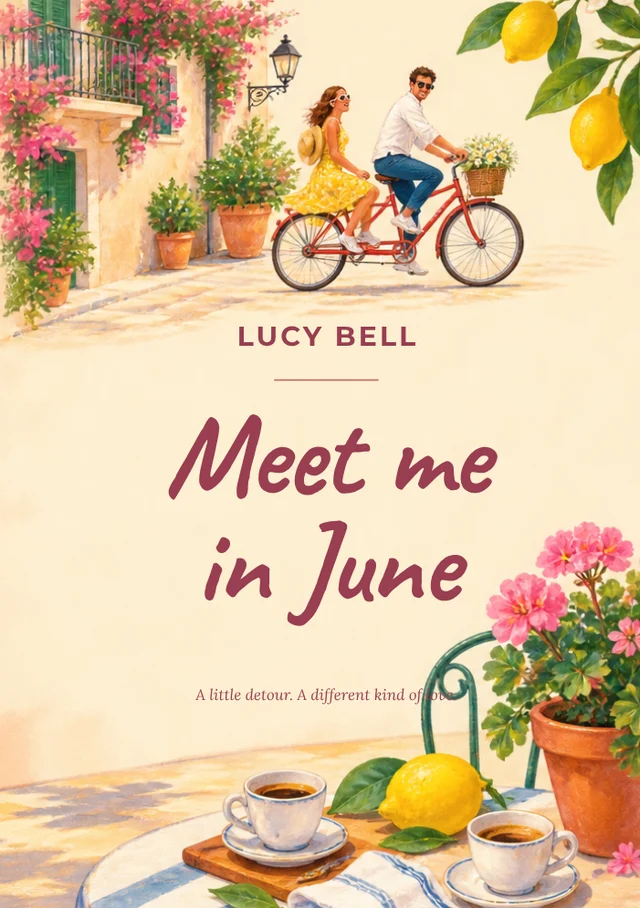
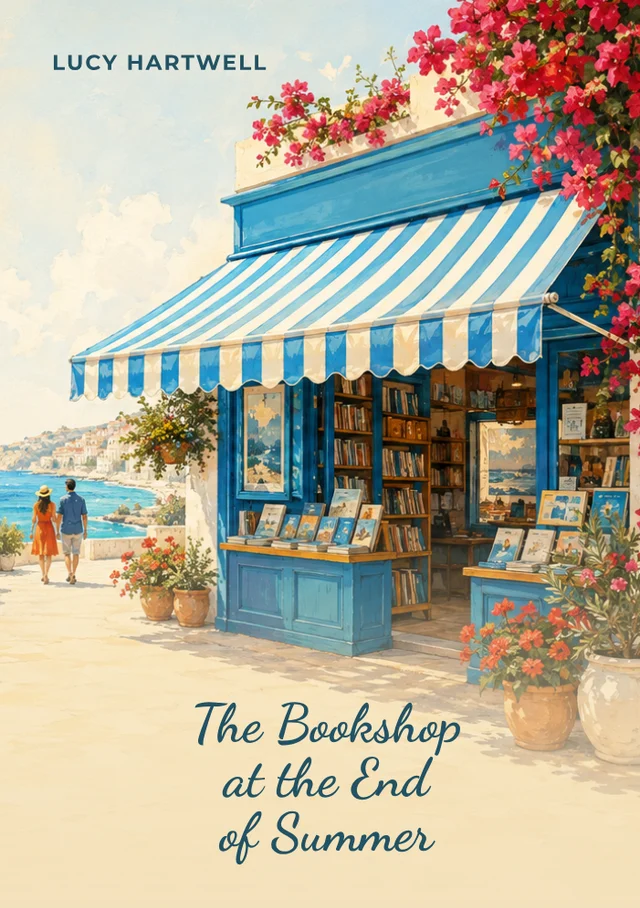
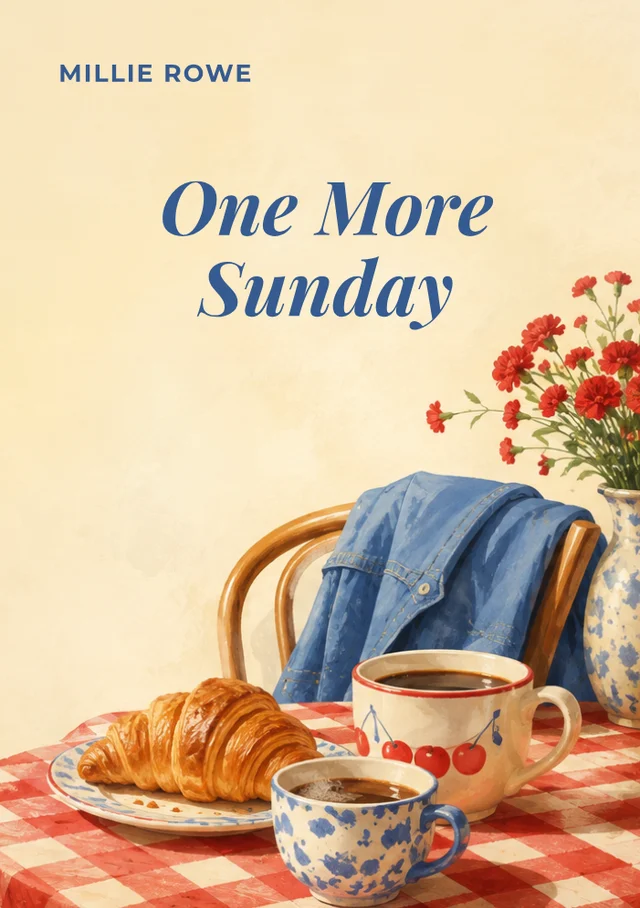
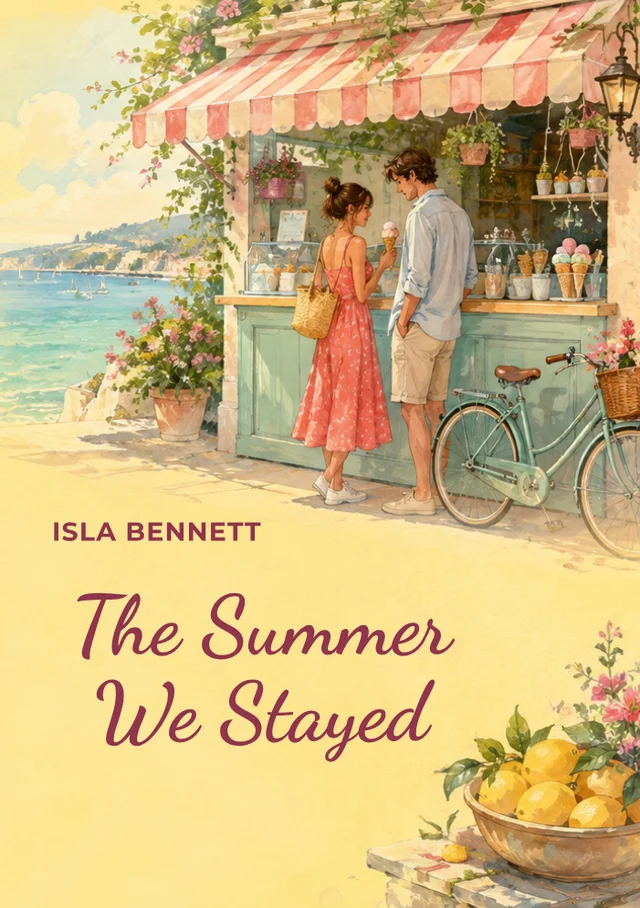
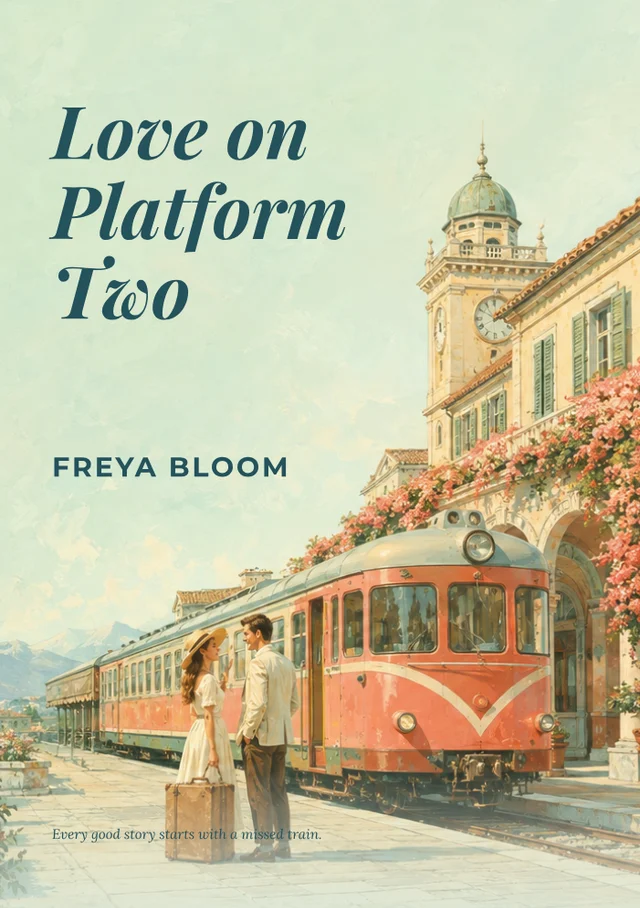
These are shared designs with sample copy. Preview your choice in the Cover Builder, then select Use this cover to start personalising it.
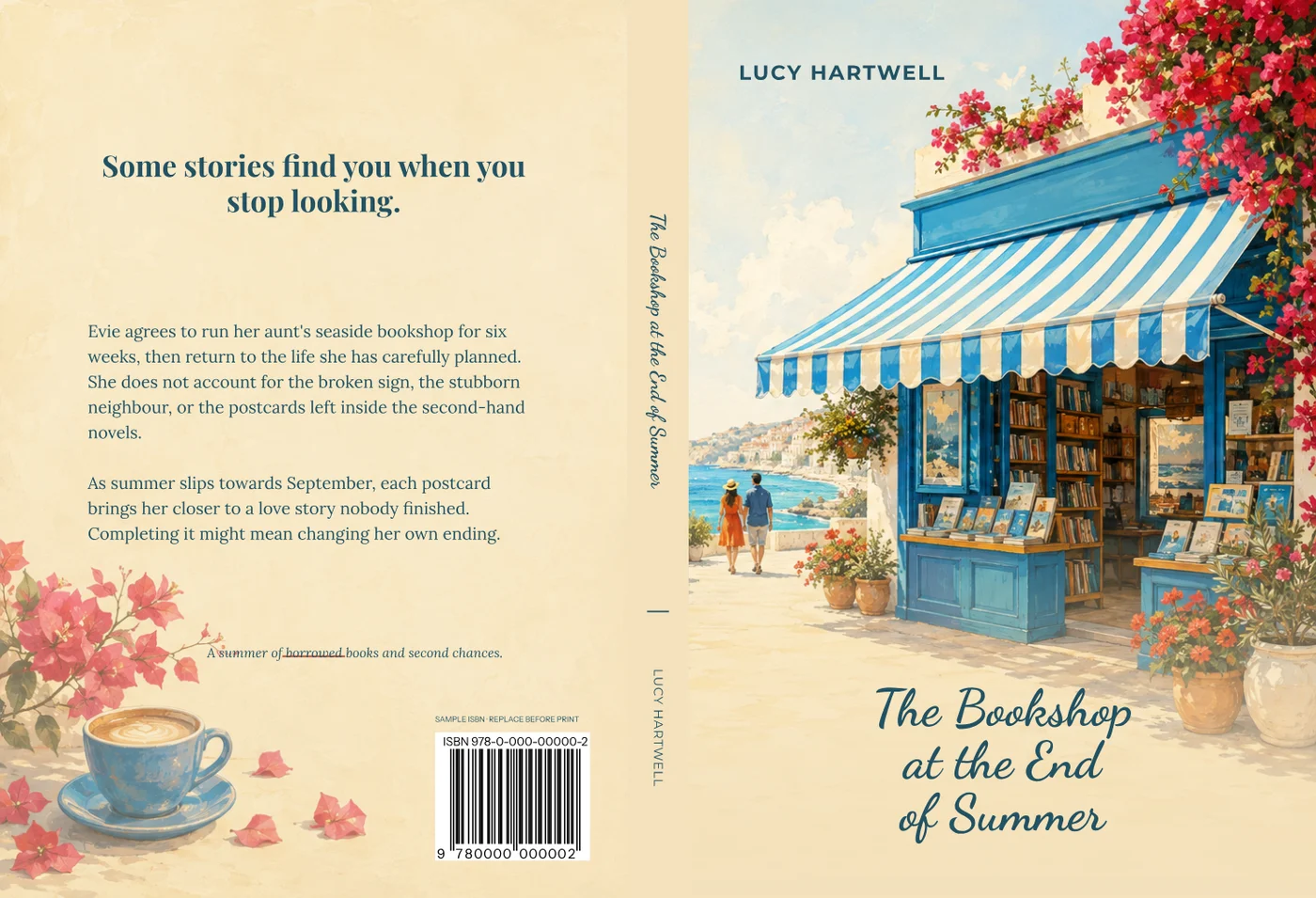
The Bookshop at the End of Summer: example back, spine and front. Replace the sample copy and ISBN.
THE STORY CONTINUES AROUND THE BOOK
The whole cover. The same atmosphere.
Your chosen design includes editable text and a coordinated back and spine. Add your title, author and blurb, then set the dimensions for your paperback.
Confirm the final page count and paper so the spine fits. Review the complete wrap and the builder's text and image-quality checks before preparing the cover for print.
An illustrated, colourful cover can suggest a different experience from a quieter, restrained design. Choose the tone your reader will find inside, whether playful, hopeful or reflective.
02
Give expressive lettering room.
Handwritten fonts can give a title warmth and personality. Check how your actual words sit together, especially if they contain long names or need several lines. Keep the author clear of busy details.
03
Introduce the people, then the obstacle.
A romance blurb works best when the reader can understand the characters and what keeps them apart. Let the back-cover copy add that emotional detail while the artwork establishes the setting.
BEFORE YOU BEGIN
Romance cover questions.
For pricing, shared designs and print preparation, read the collection FAQs.
Are there illustrated romance covers?
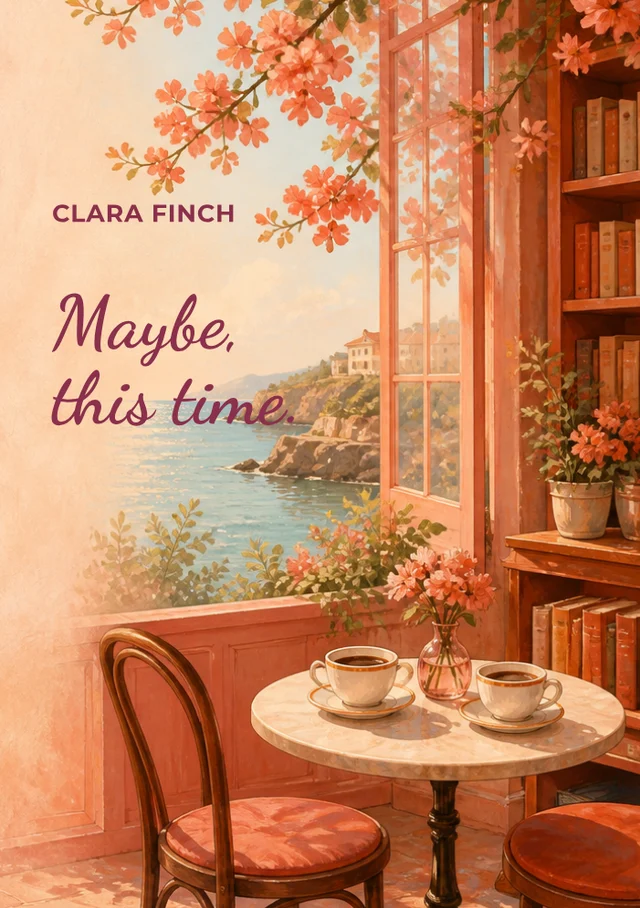
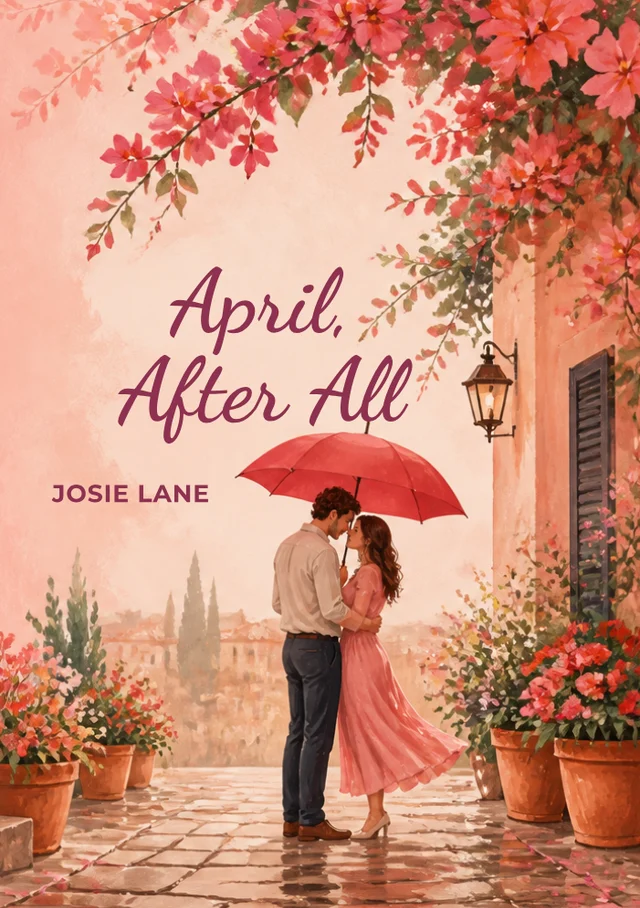
Meet me in June offers expressive handwritten lettering and an illustrated setting. The summer we stayed and Maybe, this time provide other starting points for contemporary romantic fiction.
Can I use a cover for a romance series?
Yes. Save and edit each book as its own design, keeping a recognisable author treatment or series line. Review each title individually so longer words do not crowd the artwork.
Where are the fantasy romance designs?
Browse the romantasy collection for ornamental and magical imagery. Those covers place more emphasis on the fantasy world alongside the relationship at the centre of the story.